Kajabi Vs. Skool For Delivering Your Course & Program: Ultimate Showdown
Choosing the right platform to deliver your course or program can feel overwhelming. You want something easy to use, reliable, and powerful enough to help your content shine.
That’s where Kajabi and Skool come in—two popular options that many creators trust. But which one fits your needs better? By the end of this article, you’ll have a clear understanding of how Kajabi and Skool compare, so you can confidently pick the perfect home for your course.
Keep reading to find out which platform will help you grow your audience and boost your success.
Credit: freshlearn.com
Platform Features
Choosing the right platform to deliver your course or program depends on its features. Both Kajabi and Skool offer tools to help you create and share your content. Understanding their platform features will guide you in making the best choice for your teaching needs.
Course Creation Tools
Kajabi provides a wide range of course creation tools. It allows you to build multimedia lessons with videos, quizzes, and downloads. Skool focuses on simplicity, offering easy-to-use tools for creating lessons and assignments. Kajabi supports drip content to release lessons over time. Skool’s tools are straightforward and quick to set up.
Content Delivery Options
Kajabi offers flexible content delivery, including mobile apps and web access. Students can access courses anytime, anywhere. Skool delivers content mainly through its community platform, blending lessons with discussions. It encourages interaction around the material. Both platforms support video and text content well.
Community Building Features
Skool centers around community engagement. It has built-in discussion boards, group chats, and member profiles. This creates a social learning environment. Kajabi also includes community features but focuses more on course delivery. It offers forums and email integration. Skool’s community tools are more interactive and active.
Customization And Branding
Kajabi allows extensive customization of your course site. You can change colors, fonts, and layouts to match your brand. Skool offers limited branding options but keeps a clean, simple design. Kajabi gives you control over the user experience. Skool prioritizes ease of use over deep customization.
User Experience
User experience plays a big role in choosing the right platform for your course or program. It affects how easy it is for you to create content and for students to learn. Both Kajabi and Skool offer different experiences that can impact your teaching and your students’ progress.
Interface Design
Kajabi has a clean and modern look. The design focuses on simplicity and professionalism. It uses soft colors and clear fonts. This makes it easy for teachers to build courses and for students to focus on content.
Skool offers a more community-driven design. It looks like a social platform with discussion boards and groups. The interface is simple but less formal than Kajabi. It encourages interaction between students and instructors.
Ease Of Navigation
Kajabi’s menu is well-organized. Teachers find it simple to add lessons, quizzes, and offers. Students can move through courses step-by-step without confusion.
Skool’s navigation focuses on groups and discussions. It is easy for students to join conversations and find resources. Some may find the course layout less structured than Kajabi.
Mobile Accessibility
Kajabi supports mobile browsing well. The platform adapts to different screen sizes. Students can watch videos and complete tasks on phones or tablets.
Skool offers a mobile app. This helps students stay connected on the go. Notifications and updates come directly to their phones for quick access.
Student Engagement
Kajabi uses quizzes, assessments, and email automation to keep students engaged. It focuses on tracking progress and rewarding milestones.
Skool centers on community interaction. Forums, live chats, and group discussions boost participation. Students feel part of a learning group, not just taking a course.
Pricing Plans
Choosing the right platform for your course or program often depends on pricing. Both Kajabi and Skool offer different plans. These plans fit various budgets and needs. Understanding their pricing helps you pick the best option.
Subscription Tiers
Kajabi has three main subscription tiers. These are Basic, Growth, and Pro. Each plan increases in price and features. Skool offers a simpler pricing model with one main plan. This plan includes all core features and unlimited members.
Kajabi’s Basic plan suits beginners with limited courses. The Growth plan adds marketing tools and more customization. Pro is for larger businesses needing advanced options. Skool’s single plan keeps things straightforward and easy to manage.
Value For Money
Kajabi offers many features for the price. It combines course hosting, email marketing, and sales funnels. This can reduce the need for extra tools. Skool focuses on community building and course delivery. It provides strong engagement features at a lower cost.
For creators who want all-in-one tools, Kajabi gives good value. For those focused on community and simplicity, Skool may be more cost-effective. Both platforms offer solid value depending on your priorities.
Additional Costs
Kajabi’s plans cover most needs but extra costs can appear. For example, advanced third-party integrations may require add-ons. Also, transaction fees apply if you use external payment processors. Skool charges no extra for members or courses beyond the base price.
Consider transaction fees and add-ons when budgeting. Kajabi’s higher price might include more features but expect some extra costs. Skool’s flat fee helps keep expenses predictable and simple.
Marketing And Sales
Marketing and sales are key parts of selling your course or program. Choosing the right platform can make your work easier. Kajabi and Skool offer different tools for promoting your content. Understanding their features helps you pick the best for your needs.
Sales Funnel Integration
Kajabi has built-in sales funnel tools. It guides visitors step-by-step to buy your course. You can create landing pages, upsells, and checkout pages in one place. Skool focuses more on community and less on sales funnels. It lacks advanced funnel features found in Kajabi. For smooth sales flow, Kajabi stands out.
Email Marketing Tools
Kajabi offers a complete email marketing system. You can send newsletters, automate sequences, and tag contacts easily. It helps you nurture leads and keep students engaged. Skool does not include email marketing tools. You must use third-party services for emails. Kajabi saves time by combining course and email tools.
Affiliate Program Support
Kajabi supports affiliate programs directly. You can set commissions and track referrals inside the platform. This encourages others to promote your course for you. Skool does not provide built-in affiliate support. You need external software to manage affiliates. Kajabi’s affiliate features simplify growing your sales team.
Support And Resources
Support and resources play a key role in choosing the right platform for your course or program. They help you solve problems fast and keep your course running smoothly. Both Kajabi and Skool offer various support options and learning materials. Let’s explore how each platform supports its users.
Customer Support Channels
Kajabi provides email support and live chat. Their team responds quickly and helps with technical issues. Skool offers support mainly through email and a help center. Response times can vary but are generally helpful. Neither platform has phone support, which may matter to some users.
Training Materials
Kajabi has a wide range of tutorials and guides. They cover everything from setup to marketing your course. Skool offers fewer official tutorials but focuses on simple, easy-to-follow instructions. Kajabi’s materials are more detailed, while Skool keeps things straightforward.
Community Support
Kajabi has an active user community on Facebook and other forums. Users share tips and solutions freely. Skool’s platform includes a built-in community feature. This allows course creators and students to interact directly. Both platforms encourage peer support, which helps solve problems quickly.

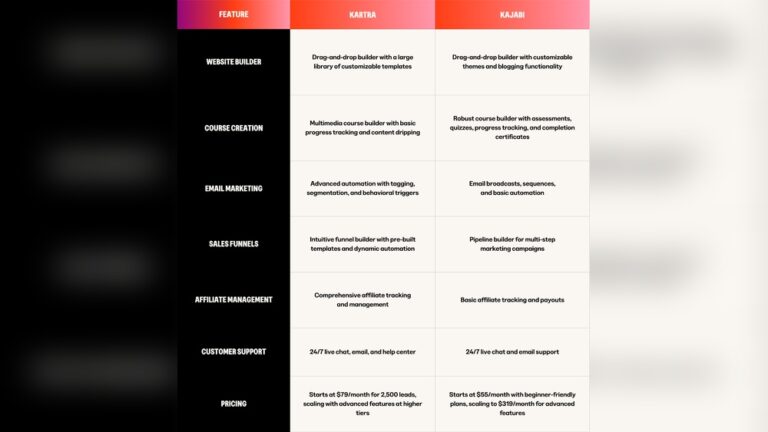
Credit: kajabi.com
Pros And Cons
Choosing the right platform to deliver your course or program is important. Both Kajabi and Skool have strengths and weaknesses. Understanding these helps you pick the best tool for your needs.
Strengths Of Kajabi
Kajabi offers a full suite of tools for course creators. It includes website building, email marketing, and payment processing. The platform is easy to use and looks professional. It supports multimedia content like videos, quizzes, and downloads. Kajabi also has strong customer support and regular updates. Users can automate marketing and sales processes within the platform. It suits creators who want an all-in-one system.
Strengths Of Skool
Skool focuses on community and interaction. It blends courses with social networking features. Users can create groups, forums, and live discussions. Skool encourages engagement and peer learning. The platform is simple and clean in design. It works well for creators who want to build a strong community. Skool also offers easy integration with other tools. It fits programs that rely on member interaction.
Limitations To Consider
Kajabi can be expensive for beginners. The wide range of features may overwhelm some users. Customization options exist but can require time to learn. Skool lacks advanced marketing tools inside the platform. It does not offer a website builder or email marketing. Skool’s course creation features are basic compared to Kajabi. Both platforms have limited payment gateway options. Choose based on your priorities for features and budget.
Choosing The Right Platform
Choosing the right platform to deliver your course or program can shape your success. It affects how your students learn and how you manage your content. Kajabi and Skool both offer tools for online teaching. Each platform suits different needs. Understanding their strengths helps you pick the best fit.
Best For Different Course Types
Kajabi works well for courses needing strong marketing tools. It supports video lessons, quizzes, and drip content. You can sell courses and memberships easily. Skool focuses on community learning. It blends courses with social groups and forums. Great for interactive programs and coaching. Choose Kajabi for structured courses. Choose Skool for community-driven learning.
Scalability And Growth
Kajabi is built to grow with you. It handles many students and advanced sales features. You can add new courses and memberships without hassle. Skool shines with engagement as your group grows. It keeps learners connected and active. But it has fewer marketing tools. Kajabi offers more options for scaling business. Skool supports growth through community interaction.
Final Recommendations
Pick Kajabi if you want all-in-one marketing and course delivery. It suits creators focused on sales and automation. Opt for Skool if your goal is building a tight community. It works well for coaches and group programs. Think about your course style and long-term goals. The right platform makes teaching easier and more effective.

Credit: www.courseplatformsreview.com
Conclusion
Choosing between Kajabi and Skool depends on your course needs. Kajabi offers strong marketing and website tools. Skool focuses on community and easy course delivery. Think about what matters most for your students. Budget and tech skills also play a big role.
Both platforms can help you share knowledge well. Take your time to explore each option. The right choice will support your teaching goals best.
Affiliate Disclaimer

I would like to let my visitors know that I am a proud affiliate partner of Kajabi. This means some of the links on this page may be affiliate links, and if you decide to sign up or purchase through them, I may earn a commission.

This commission helps support my work, content creation, and ongoing reviews—at no additional cost to you. You will always pay the same price, whether you use my link or go directly to Kajabi.
![Thinkific Vs. Kajabi: Which is Best? [2025] – Ultimate Showdown](https://careeradvice.site/wp-content/uploads/2025/11/thinkific-vs-kajabi-which-is-best-2025-768x432.jpg)