Kajabi Vs Kartra: Find the Right Platform for Your Online Success
Choosing the right platform for your online business can feel overwhelming. You want a tool that’s easy to use, powerful, and fits your unique needs.
That’s where Kajabi and Kartra come in. Both promise to help you build, market, and grow your business—but which one is truly the best fit for you? You’ll discover the key differences, benefits, and drawbacks of Kajabi and Kartra. By the end, you’ll have a clear picture of which platform can help you reach your goals faster and with less hassle.
Keep reading to find the perfect match for your online success.
Platform Features
Choosing the right platform for your online business depends a lot on the features it offers. These features can affect how easily you create and sell your courses, market your products, and handle payments. Both Kajabi and Kartra have strong features, but they differ in some key areas. Understanding these differences will help you pick the best fit for your needs.
Course Creation Tools
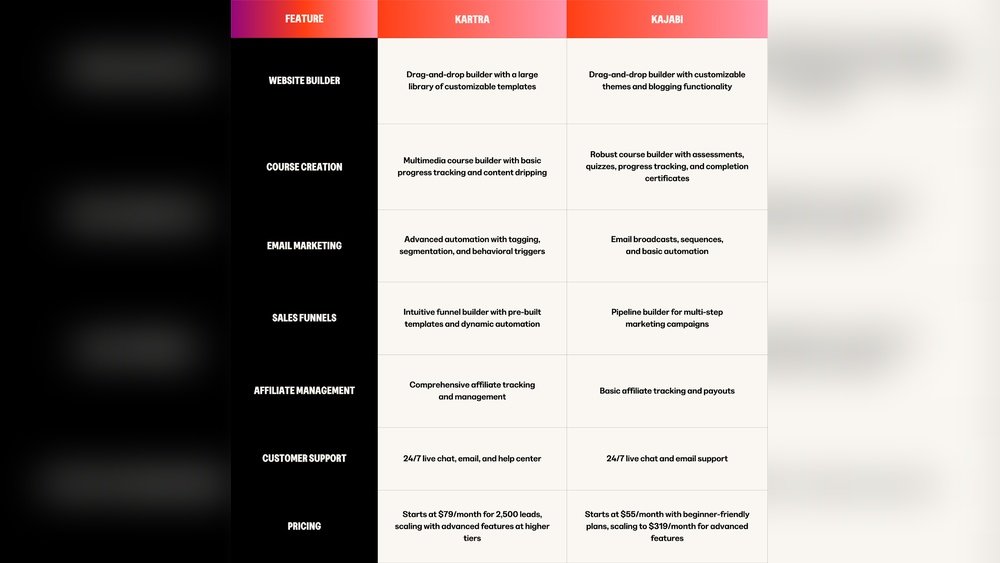
Kajabi provides a simple way to build and organize online courses. It offers templates, quizzes, and drip content to help keep students engaged. Kartra also lets you create courses but focuses more on combining courses with marketing tools. Kajabi’s course builder feels more tailored for educators and trainers. Kartra’s approach suits those who want an all-in-one marketing and sales solution.
Marketing Automation
Kartra excels in marketing automation with powerful email campaigns and tagging options. It allows you to create complex automation sequences easily. Kajabi has marketing automation but with fewer options. It covers basics like email sequences and event triggers. Kartra’s marketing tools fit users who need detailed control over customer journeys. Kajabi works well for simpler marketing needs.
Sales Funnel Builder
Both platforms include sales funnel builders to guide customers step-by-step. Kartra offers more funnel templates and customization choices. It supports upsells, downsells, and cart abandonment features. Kajabi’s funnel builder is straightforward and integrates well with its course system. Kartra is better if you want advanced funnel strategies. Kajabi is good for easy setup and quick launches.
Payment Processing Options
Kajabi supports Stripe and PayPal for payment processing, making setup fast. It handles one-time payments, subscriptions, and payment plans smoothly. Kartra also supports Stripe and PayPal but adds more flexibility in payment options. It includes options for split payments and affiliate payouts. Both platforms secure payments well. Kartra suits users needing more complex payment setups.
User Experience
User experience plays a big role in choosing the right online platform. It affects how fast you learn and how well you manage your business. Both Kajabi and Kartra offer different experiences. Understanding their ease of use, customization options, and mobile access helps you decide.
Ease Of Use
Kajabi has a clean and simple interface. Beginners find it easy to start and build. The dashboard is clear and guides users step-by-step. Kartra offers many tools, which can feel overwhelming. It takes time to get used to its features. Kajabi suits those who want quick setup. Kartra fits users ready to explore more options.
Customization Flexibility
Kajabi provides good templates with moderate editing options. You can change colors, fonts, and layouts easily. Kartra gives more control over design details. It allows custom coding for unique styles. Kajabi works well for simple, polished looks. Kartra is better for those who want full control and more creativity.
Mobile Accessibility
Kajabi’s mobile app lets you manage courses and sales on the go. It is smooth and user-friendly. Kartra does not have a dedicated app but its site works on phones. The mobile experience is less smooth than Kajabi’s. Kajabi is better for users needing mobile management. Kartra works if you mainly use a desktop.
Pricing And Plans
Choosing the right platform depends a lot on pricing and plans. Both Kajabi and Kartra offer different options to fit various needs and budgets. Understanding their subscription tiers, value for money, and trial policies helps you make a smart choice.
Subscription Tiers
Kajabi has three main plans: Basic, Growth, and Pro. Each plan increases limits on products, marketing emails, and website pages. Kartra also offers three tiers: Starter, Silver, and Gold. These plans vary in the number of leads, custom domains, and automation features.
Both platforms let you scale up as your business grows. Kajabi’s plans focus more on content creators. Kartra’s tiers target marketers who want all-in-one sales funnels.
Value For Money
Kajabi costs more but includes strong course-building tools. It offers a simple, clean interface that many users like. Kartra provides more marketing options at a lower price point. You get email marketing, membership sites, and affiliate management in one package.
Deciding value depends on what features you need. Kajabi suits those focused on online courses. Kartra fits users who want full marketing control with fewer limits.
Free Trials And Refunds
Kajabi offers a 14-day free trial with full access to features. No credit card needed to start. Kartra provides a 14-day trial for just $1. This gives a risk-free way to test the platform. Refund policies vary, so check terms before buying.
Trying both platforms helps find the best fit. Free trials let you explore tools and ease of use without risk.

Credit: www.youtube.com
Integrations And Support
Choosing the right platform for your online business means checking how well it connects with other tools. Integrations help your workflow stay smooth. Support ensures you get help when you need it. Both Kajabi and Kartra offer these features, but they differ in details.
Third-party Integrations
Kajabi supports many popular tools like email marketing and payment gateways. It connects easily with apps such as Mailchimp and Stripe. These integrations help you manage customers and sales in one place.
Kartra also offers strong integration options. It includes built-in email and payment systems but can link to external services. This makes Kartra flexible for different business needs.
Customer Service Quality
Kajabi provides 24/7 email support and live chat during business hours. Their team responds quickly and solves problems effectively. Users appreciate clear and friendly help.
Kartra offers email support and live chat too. Their response time is fast, and support staff are knowledgeable. This helps users fix issues without delay.
Community And Resources
Kajabi has an active user community and offers many tutorials. You can find guides, webinars, and a helpful blog. This makes learning easier for beginners.
Kartra also has a strong community and educational resources. They provide video tutorials and a detailed help center. Users can learn new features and tips easily.
Performance And Reliability
Choosing the right platform depends a lot on how well it performs and stays reliable. Your website and online business need smooth operation. No slowdowns or long downtime. This affects your sales and customer trust. Both Kajabi and Kartra offer strong performance but have some differences worth noting.
Site Speed And Uptime
Fast site speed keeps visitors happy and engaged. Kajabi uses global servers to load pages quickly. Kartra also offers solid speed with cloud hosting. Both platforms promise over 99.9% uptime. This means your site stays online almost all the time. Downtime can hurt your business. Kajabi and Kartra work hard to avoid it.
Security Features
Security protects your data and your customers’ information. Kajabi includes SSL certificates and secure payment options. Kartra offers similar security tools plus fraud protection. Both platforms comply with data protection rules. Regular updates and backups keep data safe. You can trust either platform to secure your online business.
Scalability
As your business grows, your platform must handle more users and sales. Kajabi supports growing traffic and product expansion easily. Kartra also scales well with advanced marketing and automation tools. Both platforms allow you to add features over time. This helps your business adapt and grow without hassle.
Credit: marrsmarketing.com
Best Use Cases
Choosing the right platform depends on your specific needs and goals. Both Kajabi and Kartra serve different types of users well. Understanding their best use cases helps you pick the right tool.
Ideal Users For Kajabi
Kajabi suits creators who focus on courses and coaching. It works well for those who want a simple, all-in-one platform. Users who prefer easy content management and strong marketing tools benefit most. Kajabi fits people who need reliable hosting and smooth user experience.
Ideal Users For Kartra
Kartra fits marketers who want advanced sales funnels and automation. It attracts those who want detailed control over email campaigns and customer journeys. Users who need integrated cart and checkout options like Kartra. It appeals to businesses that want to track leads closely.
Business Types And Sizes
Kajabi suits small to medium businesses focused on education and coaching. It works well for solo entrepreneurs and small teams. Kartra fits small to large businesses with complex marketing needs. It is good for companies selling multiple products or services online.

Credit: kajabi.com
Conclusion
Choosing between Kajabi and Kartra depends on your needs and goals. Both platforms offer useful tools for online business. Kajabi suits those who want easy course creation and marketing. Kartra fits users who need strong sales funnels and automation. Think about your budget and tech comfort.
Test both platforms if possible. This helps find the best fit for your work. The right choice supports your growth and saves time. Take your time and decide what feels right.
Affiliate Disclaimer

I would like to let my visitors know that I am a proud affiliate partner of Kajabi. This means some of the links on this page may be affiliate links, and if you decide to sign up or purchase through them, I may earn a commission.

This commission helps support my work, content creation, and ongoing reviews—at no additional cost to you. You will always pay the same price, whether you use my link or go directly to Kajabi.
![Thinkific Vs. Kajabi: Which is Best? [2025] – Ultimate Showdown](https://careeradvice.site/wp-content/uploads/2025/11/thinkific-vs-kajabi-which-is-best-2025-768x432.jpg)